
For dental and medical practices, Google reviews play a direct role in how patients choose providers and are one of the most overlooked elements of a strong healthcare practice marketing strategy. They also influence local search visibility. What many practice owners overlook is that responding to reviews carries just as much weight as collecting them.
In healthcare, responding is not always straightforward. A simple reply can unintentionally cross a HIPAA line if it confirms patient status or references care. That risk makes it important to approach every response with a clear process.
Why Review Responses Matter
Patients read more than star ratings. They pay attention to how a practice communicates, especially when concerns are involved. A well-written response signals professionalism, attentiveness, and respect for patient feedback.
Consistent responses can also support stronger local rankings over time. For practices with a broader healthcare SEO and AI visibility strategy, review activity is one of the easier wins to build into an existing workflow. Google tends to favor active, engaged business profiles, and replying to reviews is one of the most visible signals of that activity.
The Compliance Challenge
Healthcare reviews require a different standard than other industries. Even if a reviewer shares personal details, your response cannot validate or expand on that information.
Common mistakes include:
- Confirming someone is a patient
- Referencing a procedure, condition, or visit
- Trying to correct the reviewer publicly
- Responding emotionally to negative feedback
A safer approach is to keep responses general, professional, and focused on service rather than specifics.
Ground Rules for Safe, Effective Responses
Before responding to any review, it helps to follow a consistent set of guidelines. These reduce risk and create a better experience for future readers.
- Respond within 48 hours when possible
- Keep replies brief, usually two to four sentences
- Use a natural, conversational tone
- Avoid confirming or denying patient relationships
- Do not discuss treatments or outcomes
- Move negative conversations offline quickly
These basics create a strong foundation, but knowing how to respond in different situations is where most teams get stuck.
Adjusting Your Approach by Review Type
Not every review should be handled the same way. The tone and structure should shift depending on the rating and the content of the feedback.
Five-star reviews are an opportunity to reinforce a positive experience. Personal touches, such as referencing a team member or welcoming a new patient, help strengthen the relationship.
Four-star reviews often include a small concern. A good response acknowledges the feedback and leaves the door open for improvement without asking for details publicly.
Three-star reviews require more balance. It is important to recognize what went well while also showing that concerns are taken seriously. These responses should guide the conversation offline.
One- and two-star reviews carry the most risk. Defensive or overly detailed replies can create a negative impression for anyone reading later. A calm, measured response that invites offline follow-up is usually the best approach.
Potentially fraudulent reviews should be handled carefully. In many cases, the safest move is not to respond at all and instead report the review through the proper channels.
Why Templates Help
Many practice owners and office managers do not have the time to draft thoughtful responses for every review. Without a system, responses can become inconsistent or rushed.
Using structured templates can:
- Reduce response time
- Maintain a consistent tone across your team
- Help avoid compliance risks
- Provide guidance in difficult situations
In healthcare, templates need to be written with HIPAA considerations in mind. Generic customer service scripts are not enough.
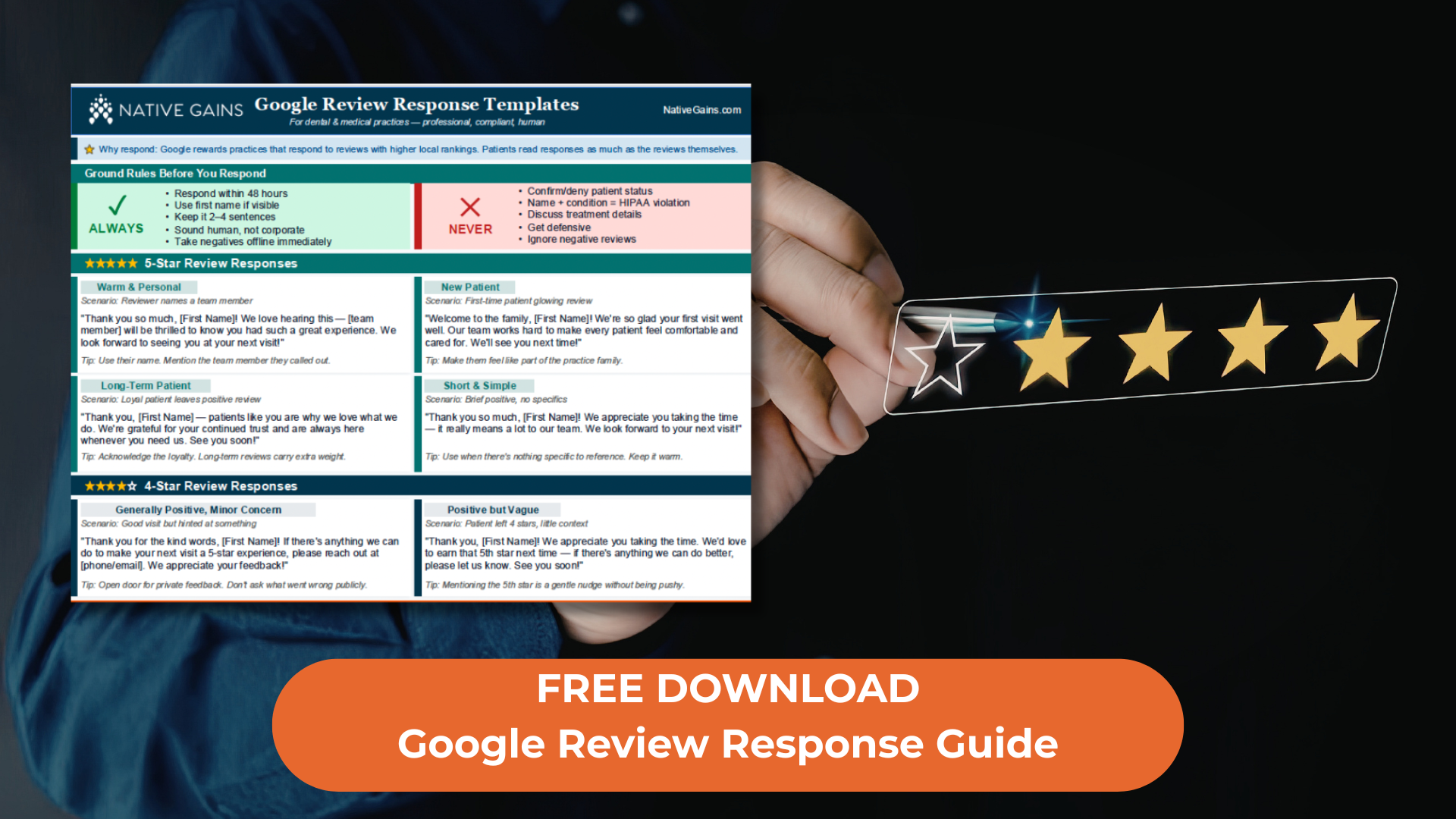
Download the Google Review Response Templates
To make this easier, we created a one-page resource designed specifically for dental and medical practices. It provides clear guidance without adding complexity to your workflow.
The resource includes:
- HIPAA-conscious response guidelines
- Templates for 5-star, 4-star, 3-star, and 1–2-star reviews
- Direction for handling difficult or suspicious reviews
- Simple instructions for customizing responses
Download the Google Review Response Templates here
When to Consider Ongoing Support
As a practice grows, managing reviews can become harder to keep up with. Missed responses or inconsistent communication can affect how patients perceive your business.
A structured approach or outside support can help maintain consistency and reduce risk. This is especially useful for practices receiving a steady volume of reviews.
NativeGains works with dental and medical practices on everything from healthcare website development to reputation management, including:
- Monitor incoming reviews
- Respond in a consistent and compliant way
- Strengthen online visibility and patient trust
If managing reviews internally is becoming a challenge, it may be worth exploring a more streamlined solution.
Final Thoughts
Responding to Google reviews is a small task that can have a significant impact. It influences how patients view your practice and how search engines rank it.
With the right approach, responses can build trust and support growth. Without a clear system, they can introduce unnecessary risk.
A simple, consistent process makes it easier to handle reviews with confidence while protecting your practice.
Aesthetic practices can apply the same reputation principles through a tailored med spa marketing strategy.