
If you own or manage a medical or dental practice, HIPAA is always on your radar. What often gets less attention is how easily compliance issues show up in marketing.
Not in obvious ways, either. More often, it’s everyday tools and habits that create exposure. A contact form that isn’t secure. A reminder email that includes too much detail. A vendor that never signed a Business Associate Agreement.
These aren’t edge cases. They’re common occurrences.
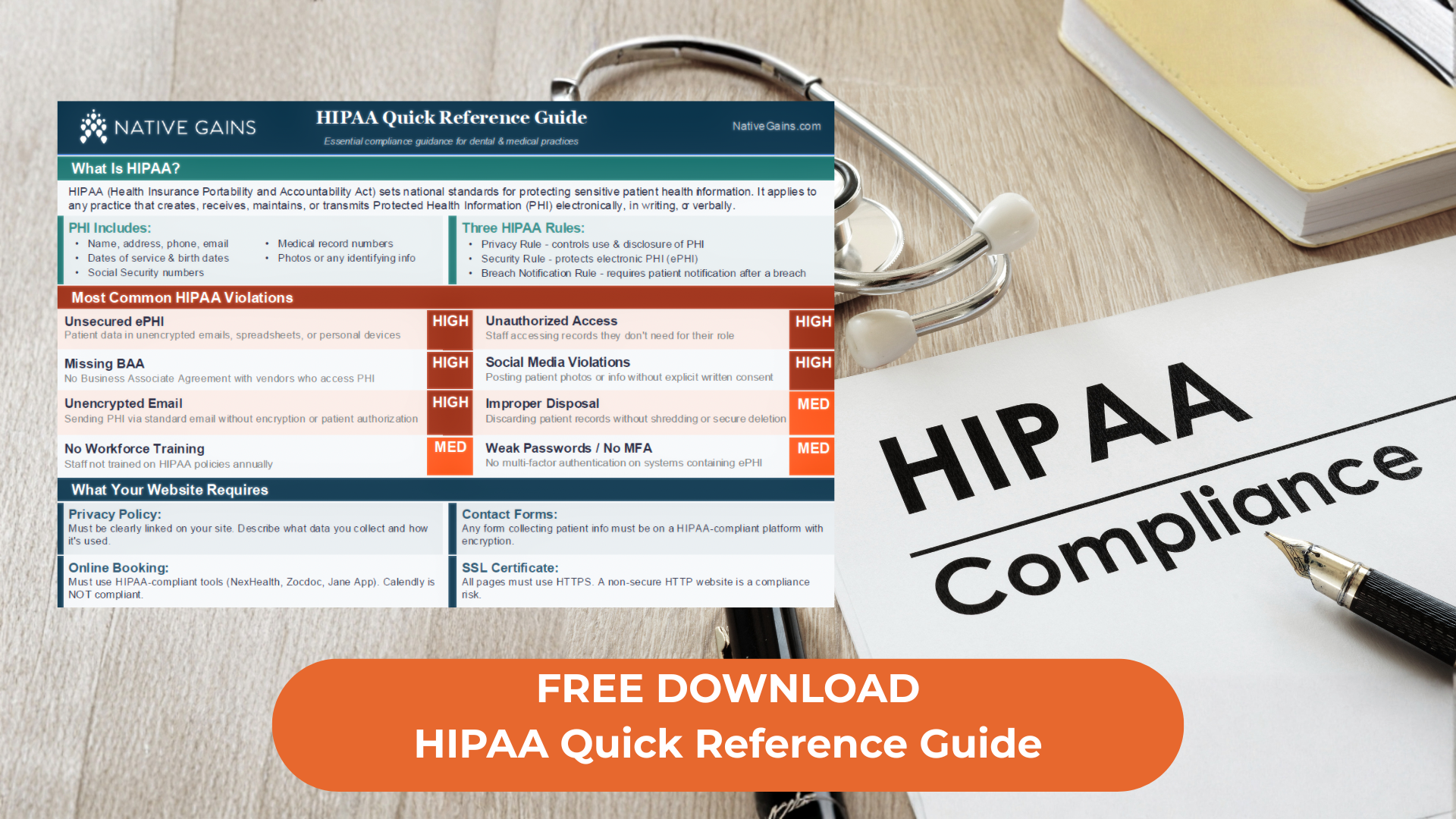
That’s exactly why we put together a simple, 2-page HIPAA Quick Reference Guide free to download. It’s meant to give practice owners a clear, usable snapshot of what matters without forcing you to dig through regulations.
Here’s a closer look at where most practices run into trouble and what to watch for.
HIPAA Doesn’t Stop at the Front Desk
It’s easy to think of HIPAA as something tied to clinical care or patient records. In reality, it extends much further.
Any time your practice creates, stores, or shares Protected Health Information (PHI), HIPAA applies. That includes your marketing systems.
PHI can include:
- Names, phone numbers, and email addresses
- Appointment details or dates of service
- Photos or anything that could identify a patient
- Even a simple inquiry tied to a specific condition
When those details move through your website, email platform, or CRM, they’re still protected.
That’s where many practices unintentionally step into risk.
Where Most HIPAA Violations Happen
In most cases, HIPAA-compliant marketing violations aren’t the result of careless behavior. They come from using tools that weren’t built for healthcare or from small gaps in process.
Some of the most common issues include:
- Unsecured email communication
Patient information sent through standard email without encryption or safeguards - Missing Business Associate Agreements (BAAs)
Vendors handling PHI without a signed agreement in place - Non-compliant website forms
Contact or consultation forms that collect patient data without proper protection - Social media missteps
Posting patient photos, testimonials, or case details without written authorization - Weak internal controls
Shared logins, lack of multi-factor authentication, or limited staff training
Individually, these might seem minor. Together, they create real exposure.
What a HIPAA-Compliant Website Actually Looks Like
A HIPAA-compliant website and marketing strategy isn’t just about checking a box with a privacy policy.
There are a few foundational elements every practice should have in place:
- A clearly visible, up-to-date privacy policy
- SSL encryption across the entire site (HTTPS)
- Secure, HIPAA-compliant contact forms
- Booking tools that meet compliance standards
- Chat or messaging tools that protect patient information
One of the biggest sticking points is that many popular tools are not compliant out of the box. Some don’t support HIPAA requirements at all.
That includes certain:
- Scheduling platforms
- Chat widgets
- Analytics and tracking tools
Without the right setup, it’s easy to collect information you shouldn’t or store it in ways that create risk.
Email and Marketing Under HIPAA
Marketing doesn’t have to stop because of HIPAA, but it does need structure.
There are clear lines between what’s acceptable and what isn’t.
What to avoid:
- Sending PHI through standard email platforms
- Adding patients to marketing lists without consent
- Using retargeting tied to patient-specific data
- Running SMS campaigns without documented opt-in
What can be done safely:
- Appointment reminders with limited information
- Email campaigns through HIPAA-compliant platforms
- Patient satisfaction surveys using secure tools
- General health education sent to opted-in audiences
In most cases, compliance comes down to three things: the platform you use, how consent is handled, and how data is stored or transmitted.
The Vendor Problem Most Practices Overlook
Vendors are one of the most common sources of compliance gaps.
If a vendor has access to PHI, a signed Business Associate Agreement is required. Without it, that relationship becomes a liability.
This applies to:
- CRM and email systems
- Website form and hosting tools
- Marketing automation platforms
- Communication software
Some vendors are built for healthcare and will sign BAAs. Others won’t, no matter how widely they’re used.
It’s not always obvious which is which, and that’s where many practices get caught off guard.
What’s at Stake
HIPAA penalties are structured in tiers based on severity and intent. Lower-level violations can still add up over time, while more serious issues can lead to substantial annual penalties if not corrected.
For most practices, though, the bigger concern isn’t the fine itself. It’s everything that comes with it:
- Loss of patient trust
- Damage to your reputation
- Disruption to daily operations
Those are harder to recover from.
A Simpler Way to Review Your Risk
HIPAA can feel complicated because it touches so many parts of your practice. That’s why having a clear, condensed reference point helps.
The HIPAA Quick Reference Guide we created covers:
- What qualifies as PHI
- The most common violations, organized by severity
- Website compliance requirements
- Email and marketing guidelines
- Which vendors will and won’t sign BAAs
- 2026 penalty tiers
- A practical compliance checklist you can use right away
It’s designed to help you quickly spot gaps without getting overwhelmed.
How Native Gains Fits In
At Native Gains, we work with medical and dental practices that want to grow without creating compliance issues along the way.
That typically involves:
- Building compliant websites and lead capture systems
- Setting up secure CRM and email workflows
- Structuring local SEO and paid advertising carefully
- Making sure the tools in use align with HIPAA expectations
The goal isn’t just better marketing. It’s marketing that holds up under scrutiny.
Final Thoughts
Most HIPAA-related marketing issues don’t come from intentional mistakes. They come from everyday tools and processes that weren’t designed with healthcare in mind.
The good news is that these gaps are usually fixable once you know where to look.
If you want a straightforward way to review your current setup, download the HIPAA Quick Reference Guide. It will give you a clear picture of where you stand and what to address next.
If you’d rather have a second set of eyes on your systems, Native Gains can help you evaluate your marketing setup and identify any areas that may need attention.
*This content is for general informational purposes only and does not constitute legal advice. For practice-specific compliance questions, consult a qualified healthcare attorney.
Organizations handling patient data should also review our guidance for healthcare brands and vendors.